
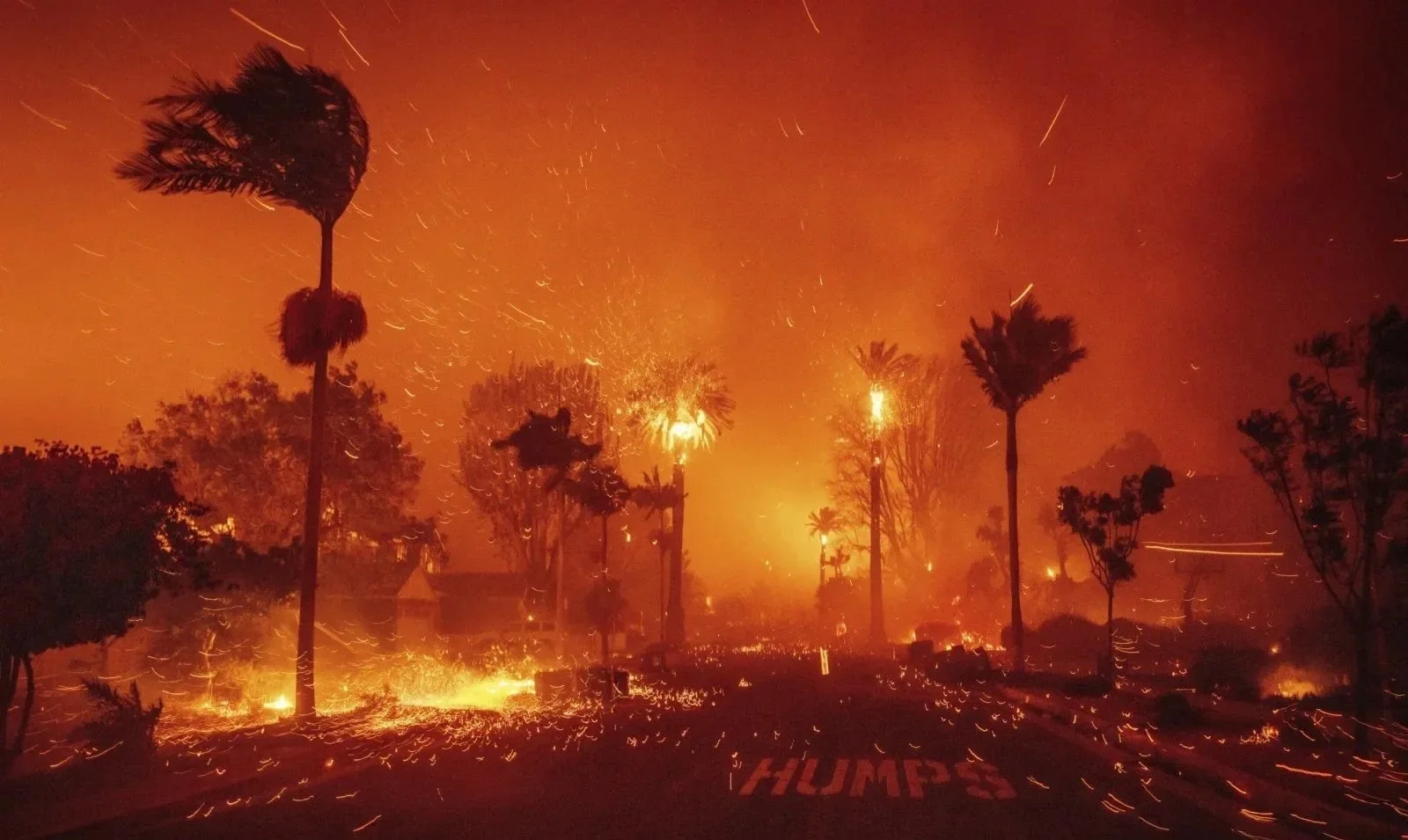
Let’s talk about extreme fire danger.
The Pacific Palisades Fire in Los Angeles, January 2025.
AP Photo/Ethan Swope
Let’s think about billionaires and property developers.
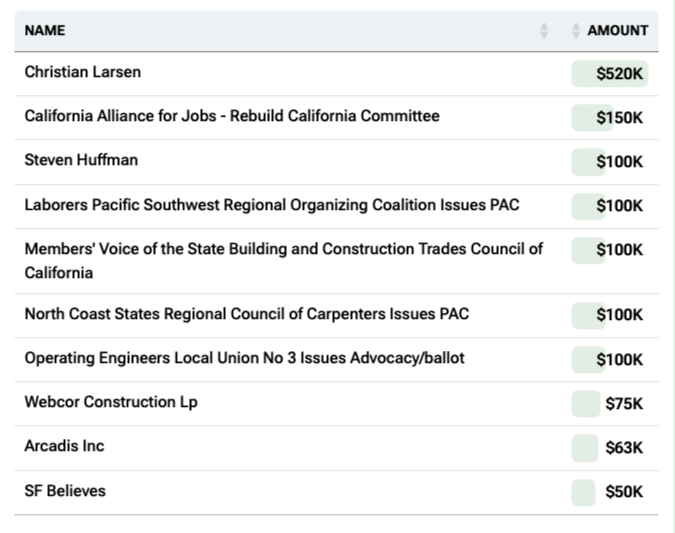
$1.75 million* in support of Prop A so far.
*San Francisco Campaign Dashboards, A: Earthquake Safety and Emergency Response Bond
Top Contributors To This Measure, May 11, 2026: Christian Larsen, $520,000; California Alliance for Jobs - Rebuild California Committee, $150,000; Steven Huffman, $100,000. Full list at sfethics.org
Here’s what City Hall means when they say:
“invests in infrastructure”
“invests in infrastructure”
modernizes
“water systems”
“strengthens”
“water systems” “strengthens”
modernizes
This is what the City of San Francisco means when they say:
invests in infrastructure
modernizes strengthens
water systems

They’re building out our drinking-water system for upzoning San Francisco.
The Austin, Texas skyline in January 2023.
Photo: KUT/Michael Minasi
Now let’s ask Mayor Daniel Lurie:
Why are you telling San Francisco that our drinking-water system will protect us during a fire disaster?
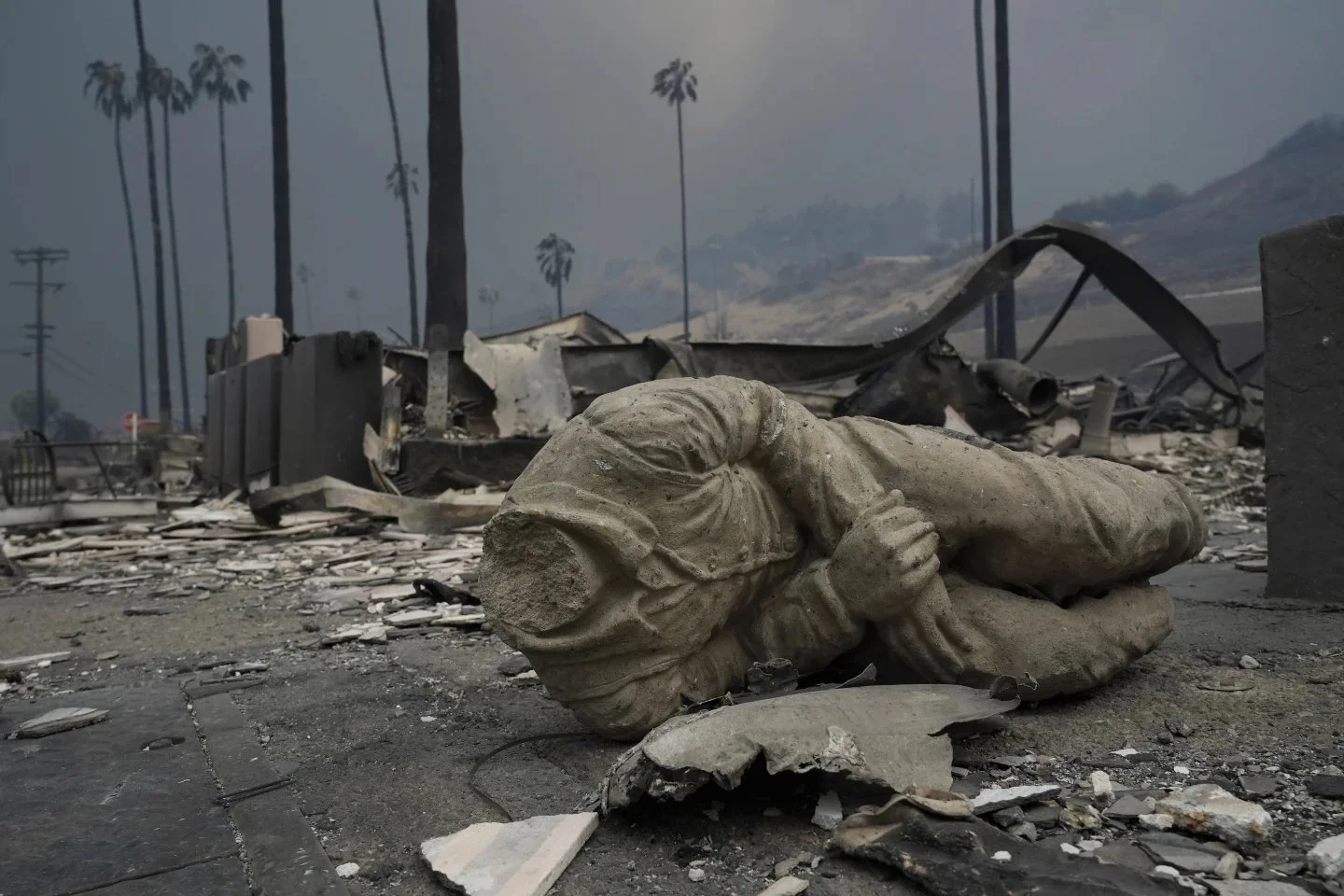
Santa Rosa, Lahaina, Malibu, and Pacific Palisades can tell you:
It won’t.
A life-sized concrete statue of a person, headless and with no feet, lying in the rubble of a burned-out Pacific Palisades neighborhood.
AP Photo/Damian Dovarganes
Vote NO On Prop A
And make sure San Francisco has Equal Fire Protection for All.
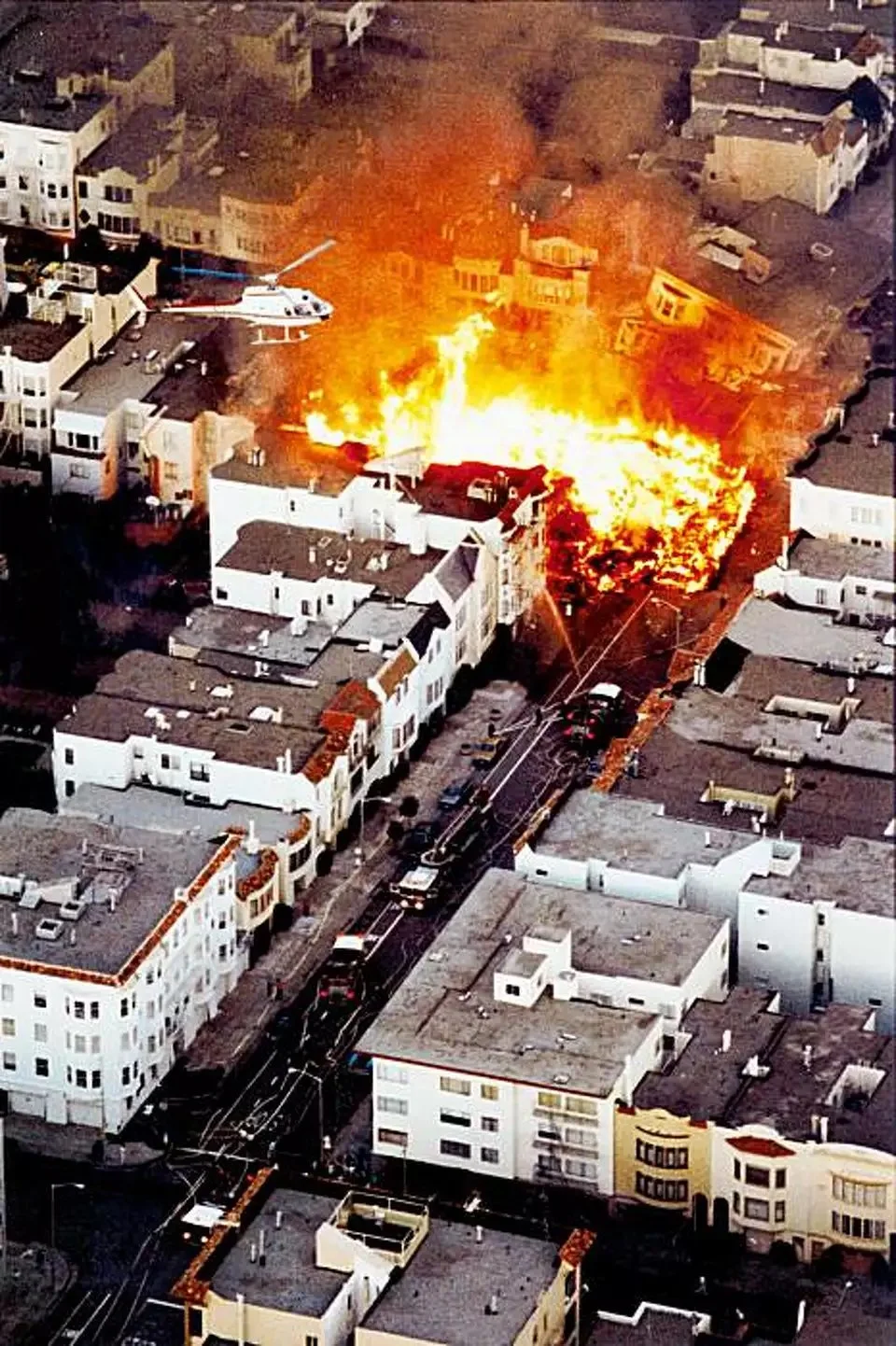
The Marina District on fire in the aftermath of the Loma Prieta earthquake, October 17, 1989. Assistant Fire Chief Frank Blackburn (1933–2025) is credited with saving the city of San Francisco with his Portable Water Supply System, which he personally designed and deployed. Photo: Contra Costa Times/Bob Pepping
From a seismologist
Joe Litehiser, Chief Seismologist (Retired)
Bechtel Systems, 1974–2014
Proposition A: Earthquake Safety and Emergency Response (ESER) Bond
If you live in any of the many neighborhoods not even considered by this ESER bond, I guarantee you that Proposition A adds almost nothing to protect you from the firestorms that happened in Los Angeles in January 2025.
Funding this bond will not improve firefighters’ access to emergency water.
The City’s plans—which are only for parts of the Richmond and Sunset Districts—are so complex that even if the City completes them, San Francisco will still not have enough access to emergency water in the crucial first few hours after a major earthquake.
In 2010, the original intent of the first ESER bond was to build a standalone, high-pressure, non-potable-water Auxiliary Water Supply System (AWSS) for all of San Francisco.
[Note: Today, San Francisco city officials and agencies refer to AWSS as “Emergency Firefighting Water System (formerly known as AWSS)”.]
AWSS is a firefighting water network that was built especially for San Francisco after the 1906 earthquake and fires destroyed 80% of the city. AWSS uses high-pressure fire hydrants to pump an unlimited amount of seawater from the Pacific Ocean, which surrounds San Francisco on three sides. Since 1913, it has covered the east side of San Francisco.
In 2019, a San Francisco Civil Grand Jury reviewed the 2010 ESER bond and put their recommendation in the title of their final report: “ACT NOW BEFORE IT IS TOO LATE: AGGRESSIVELY EXPAND AND ENHANCE OUR HIGH-PRESSURE EMERGENCY FIREFIGHTING WATER SYSTEM”.
Passing Proposition A may actually set back the Civil Grand Jury’s 2019 recommendation: technically, financially, and programmatically.
This 2026 ESER bond is flawed. There are better ways to do post-earthquake fire protection. The City knows this.
Tell the City to go back to the pre-2020 drawing board and send a bond measure to the voters whose sole focus is improved firefighting capability like that provided by the AWSS system.
Our western and southern neighborhoods, our firefighters, and ultimately all of San Francisco deserve nothing less.
Joe Litehiser
Ingleside District, District 11
May 11, 2026
From a civic group

ConnectedSF: Vote NO on Prop A
Proposition A: Earthquake Safety and Emergency Response (ESER) General Obligation Bond, up to $535 million
Fiscal Impact
Authorizes $535M in new city debt that property owners will repay through tax increases for decades ($3.40 per $100K assessed value annually at first, then at a higher peak later in the repayment cycle). It also authorizes landlords to pass on 50% of the resulting property tax increase to tenants in covered (rent-controlled) units.
How it landed on the ballot: San Francisco agencies, primarily public safety departments, like Fire, Police, Emergency Management, identified capital needs, Mayor Lurie approved the request, and the Board of Supervisors voted unanimously to put it on the June ballot.
Bottom Line
This important ESER bond needs to be pulled and rewritten with a sole focus on a fully built-out Emergency Firefighting Water System (EFWS) serving the western and southern neighborhoods of the city and seismic rebuilds for firehouses. The $200M (40%) allocated to MUNI for rebuilding the Potrero Bus Yard must be pulled out. Then it needs to be put back on the ballot in November. Otherwise, this is just another MUNI bond and should be sold as such.
WHY NO ON PROP A?
Since 2010, San Francisco voters have approved three prior Emergency Firefighting and Earthquake Safety general obligation bonds intended to strengthen San Francisco’s disaster readiness.
The first, the 2010 ESER Bond, authorized approximately $412 million. Its stated focus was seismic upgrades to fire stations, improvements to the Auxiliary Water Supply System (AWSS), and initial planning for an Emergency Firefighting Water System (EFWS) to expand water access beyond downtown. Funding primarily went toward fire station retrofits and enhancements to the existing high-pressure system serving the northeast quadrant of the city. Not one pipe was laid in the 60% of the unprotected parts of the city for EFWS.
The second, the 2014 ESER Bond, authorized about $400 million. Allocations included additional fire station seismic work, street cistern construction, and early-phase EFWS design. While planning and limited components moved forward, a citywide EFWS buildout was still not completed.
The third, the 2020 ESER Bond, authorized roughly $628.5 million. That measure included funding for fire station rebuilds, continued AWSS improvements, and further EFWS planning and segment work in the western neighborhoods.
Despite repeated commitments across all three bonds, a fully realized, citywide EFWS network, particularly serving outer neighborhoods vulnerable to post-earthquake fires, has not been delivered at scale. So, to recap, since the first ESER authorization in 2010, no comprehensive, continuous EFWS pipeline network serving the west side has been completed, despite voters voting for that very line item.
This ESER bond measure totals approximately $535 million and continues the tradition of using an important infrastructure bond for post-earthquake readiness to fund projects other than the stated purpose of the bond; in this case, to help MUNI rebuild a bus yard.
We will take a hard pass on this and hope it returns in a purer form on the November ballot. Those of us who live on the westside and in the southern parts of the city are counting on our government to build a functional EFWS. This should have happened in 2010, and while it’s not an emergency now, it never is until it is. Don’t be fooled again. Vote NO on this measure, and let’s demand its rewrite and reappearance in November.
ConnectedSF
May 2026
Source: https://www.connectedsf.com/prop-a-earthquake-safety-emergency-response-eser-general-obligation-bond
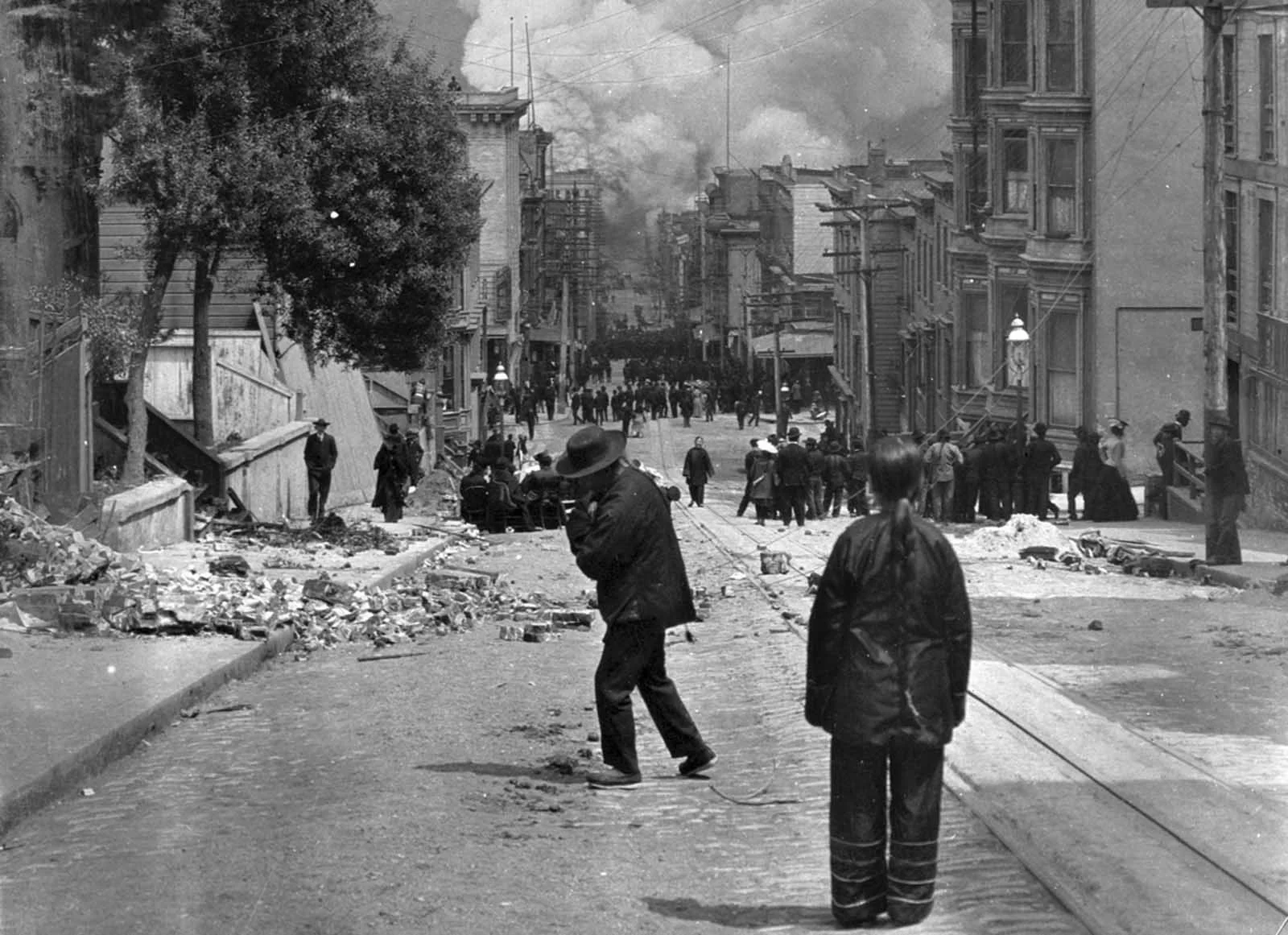
San Francisco, April 18, 1906. A Chinese girl stands in the middle of Clay Street above Dupont (now Grant Avenue), watching the post-earthquake fires advancing toward Chinatown from the Embarcadero.
Photo: Chinese Historical Society of America, Library of Congress/Arnold Genthe