
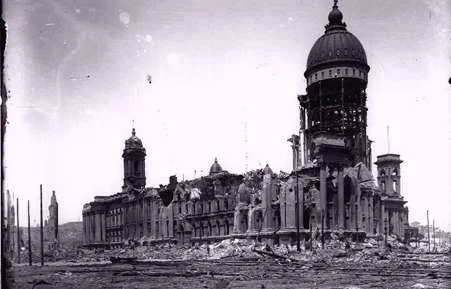
1906: Three Days of Fire
San Francisco, 1906. The burned-out shell of City Hall after the April 18 earthquake and fires. Photo: UC Berkeley
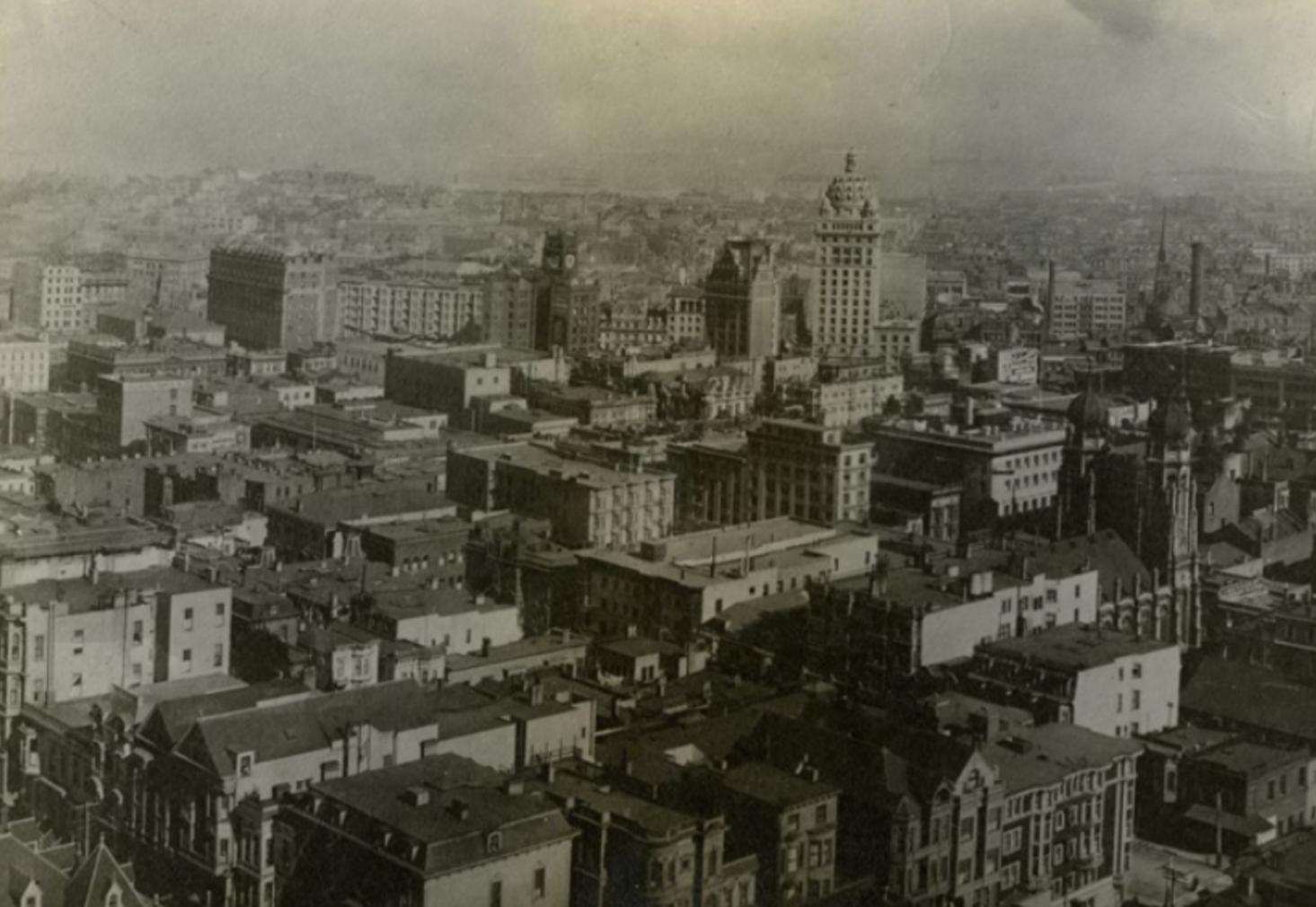
San Francisco, one day before the 1906 earthquake
View from south of Market Street, looking east toward Berkeley. The Call Building (the tallest building in the photo) is still standing today. Photo: UC Berkeley, Bancroft Library
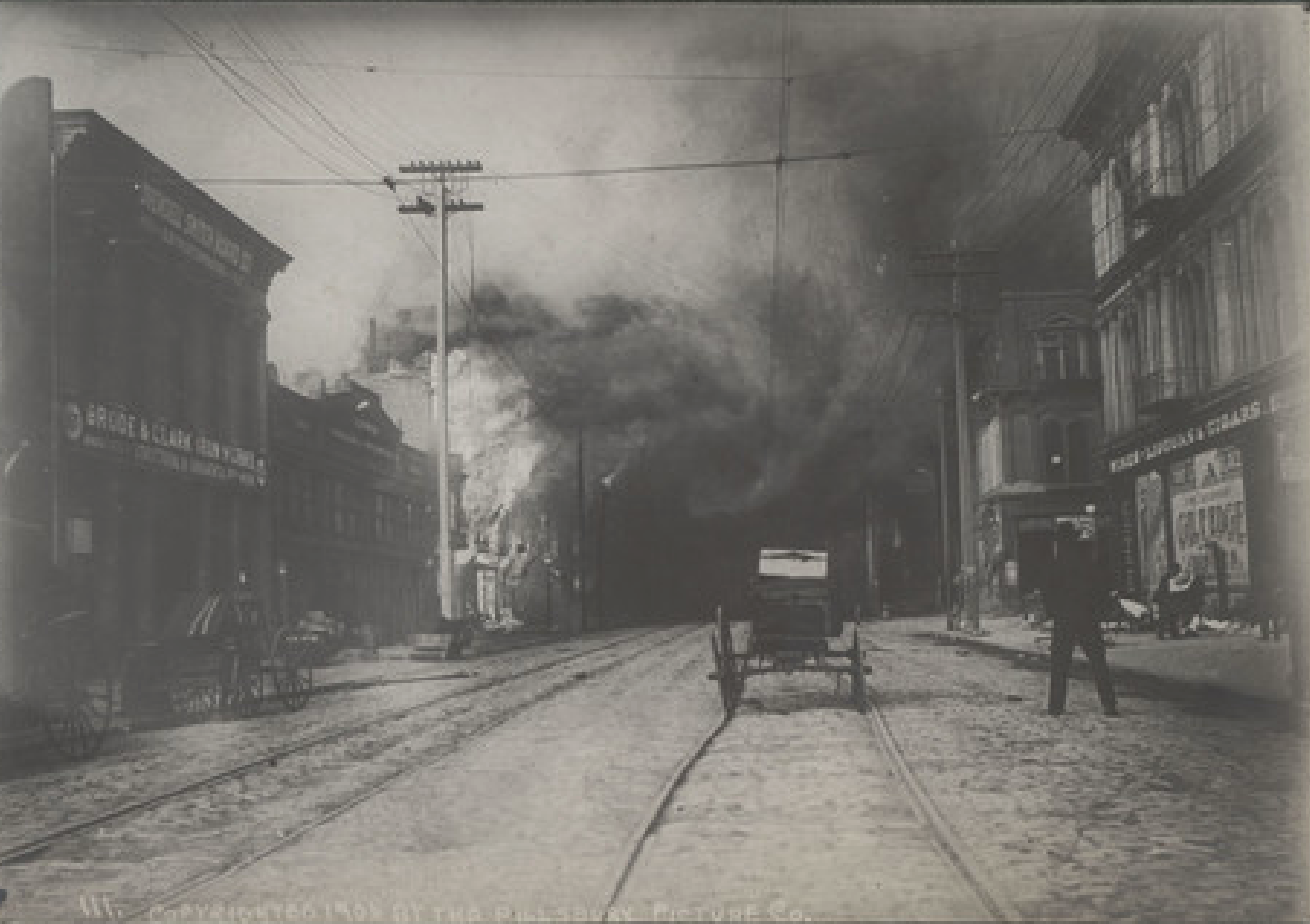
April 18, 1906: The fires begin
A fire tornado at Second and Howard Streets. Photo: UC Berkeley, Bancroft Library
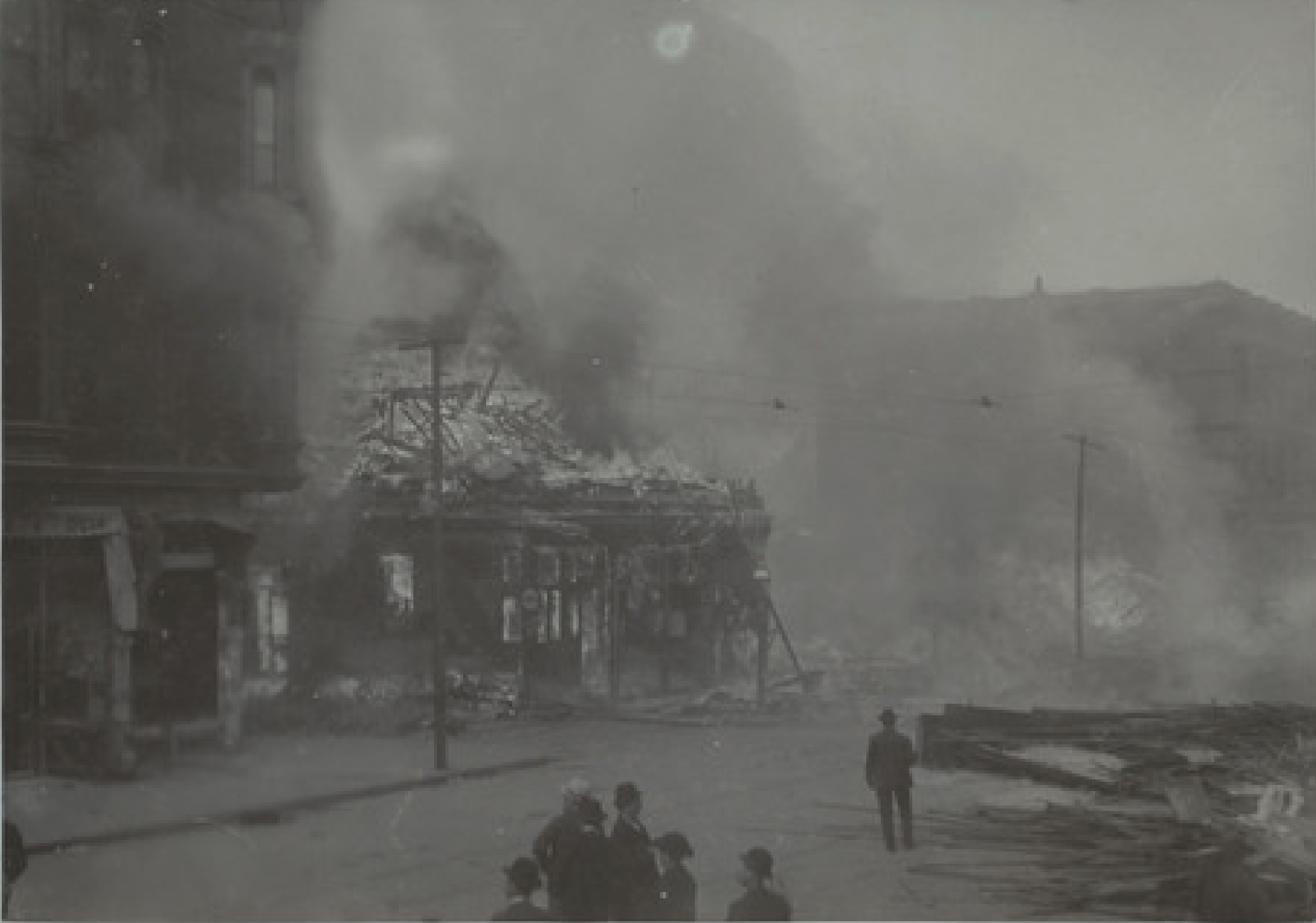
South of Market catches fire
A wooden building is consumed by fire. Many of San Francisco’s homes are wood-frame buildings that are now over 100 years old. Photo: UC Berkeley, Bancroft Library
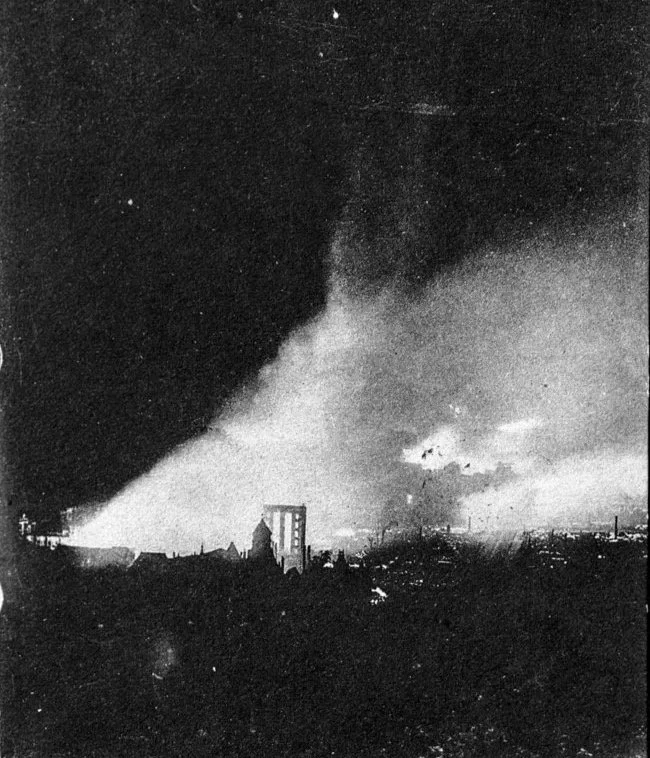
Three days of fire: The first night
View from Washington Street above Van Ness Avenue, looking downtown. Photo: OpenHistorySF
“In the meantime, the city had started on fire. The water mains had broken, and they had no water, and no hoses long enough to draw water from the Bay.
They had only about a mile of hose altogether. They were in a hell of a fix.
The fire started, and nothing could stop it, and it just kept going.”
—Aurelious Alberga (1884–1988), a Black San Franciscan who lived through the 1906 earthquake
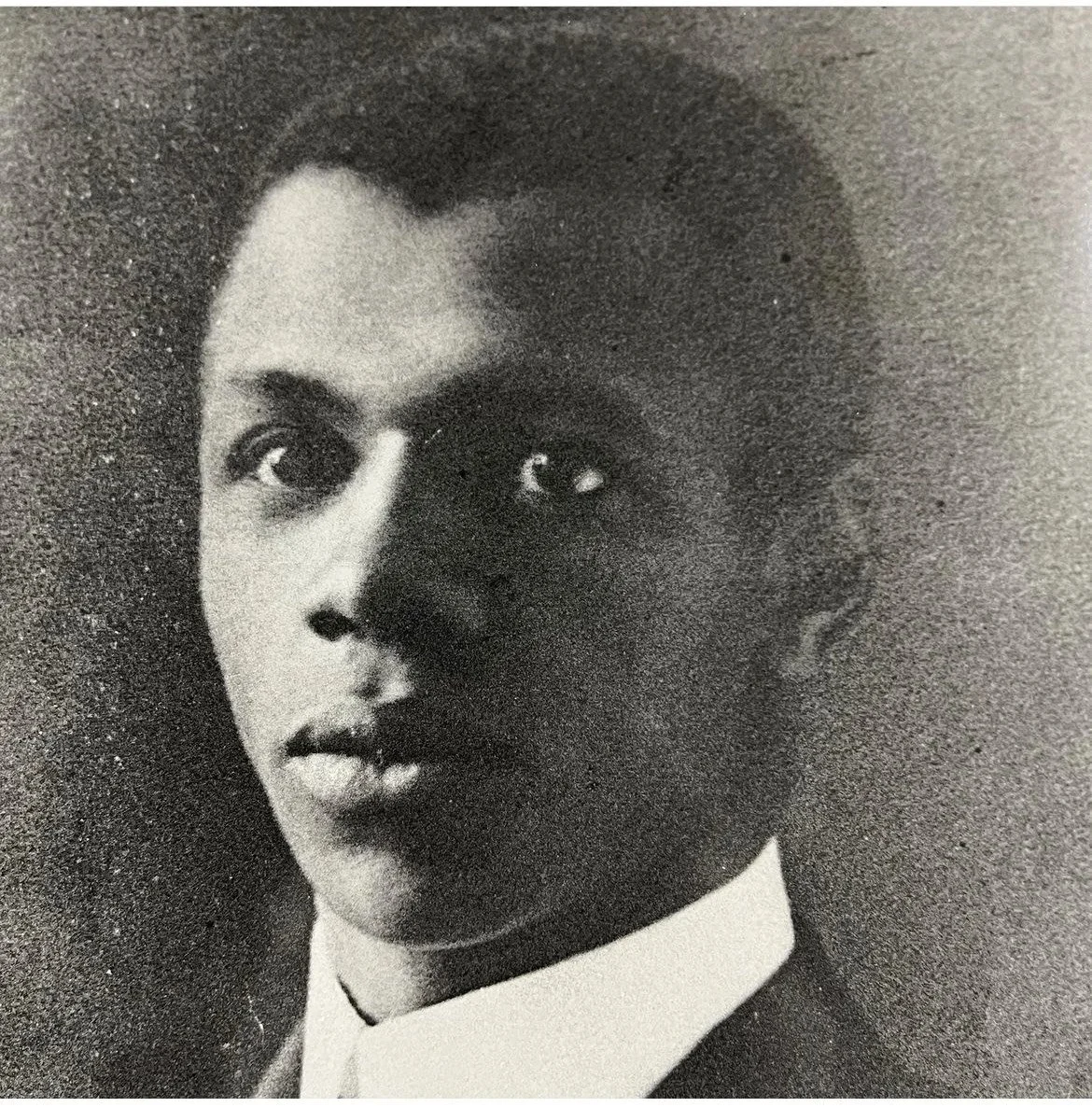
Aurelious Alberga.
Photo and text: San Francisco Public Library History Center
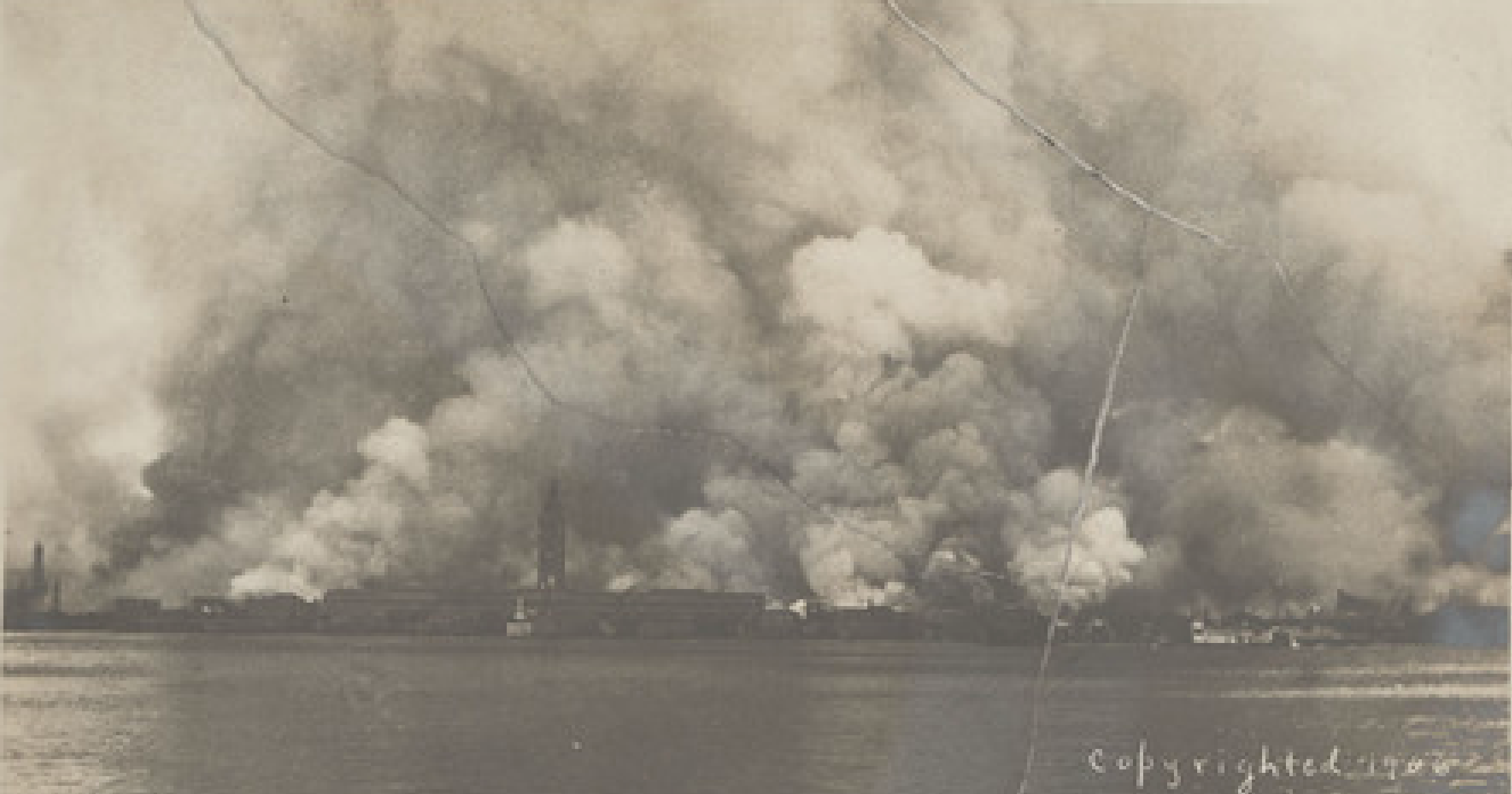
The Embarcadero on fire
View from the water, looking west toward the Ferry Building. The fires destroyed four square miles of the city: South of Market and parts of the Mission, through Chinatown and North Beach to Fort Mason, and west to Van Ness Avenue. Photo: UC Berkeley, Bancroft Library/J.P. Magagnos
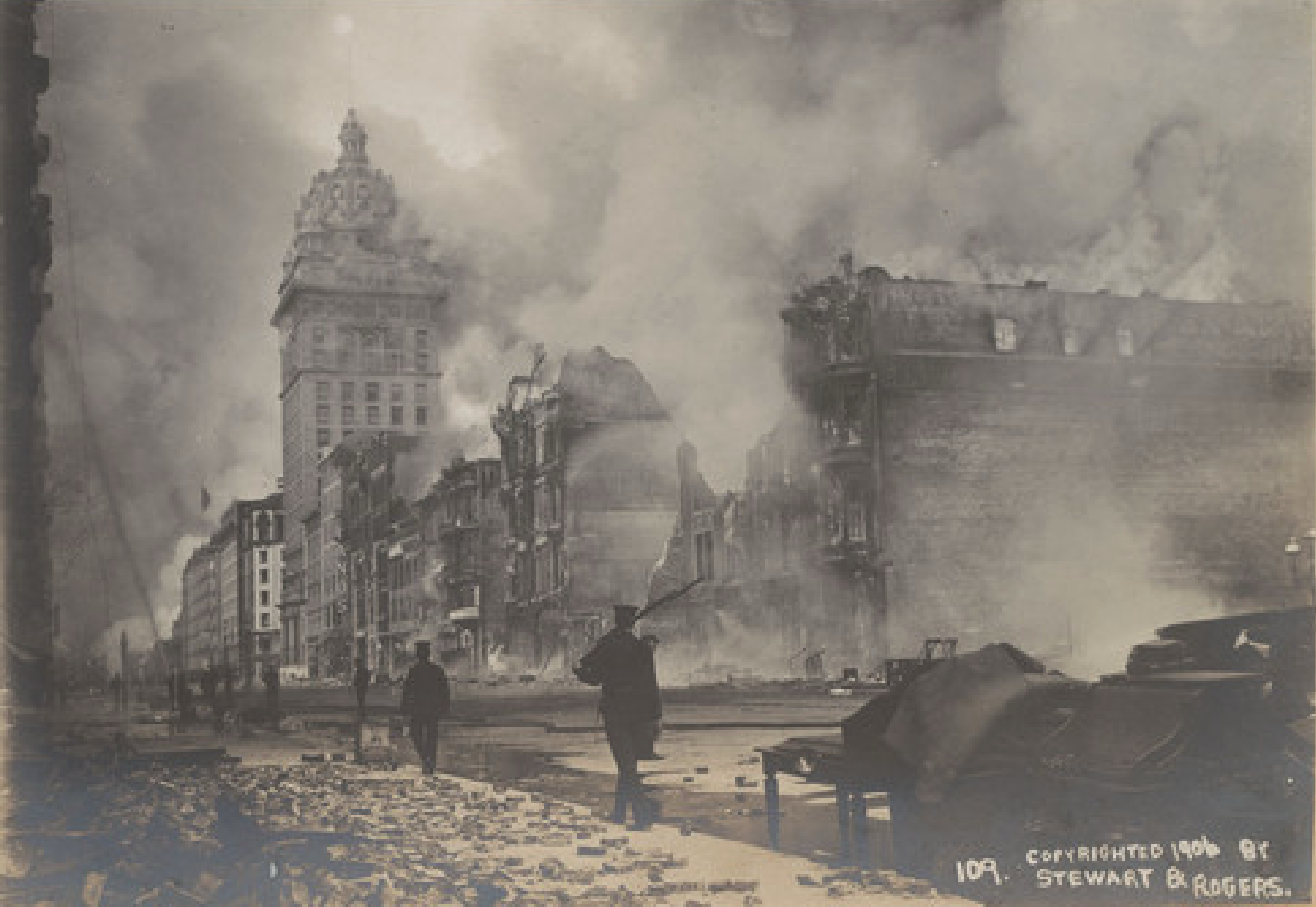
San Francisco under martial law
The U.S. military patrolling Market Street. The Call Building is on the left. Photo: UC Berkeley, Bancroft Library
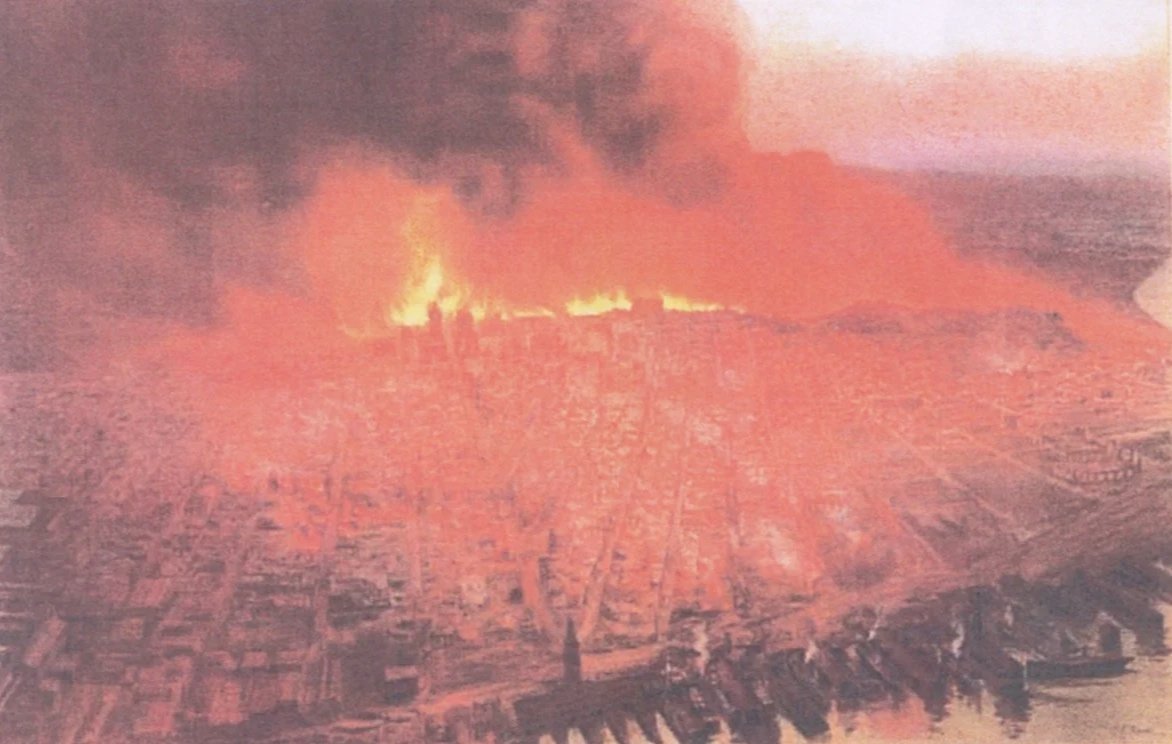
The final stand: Van Ness Avenue
View from above the Ferry Building looking west. (Market Street ends at the Ferry Building.) The white area indicates the ash left behind as the fires advanced toward Van Ness. Photo: The Sunset Beacon
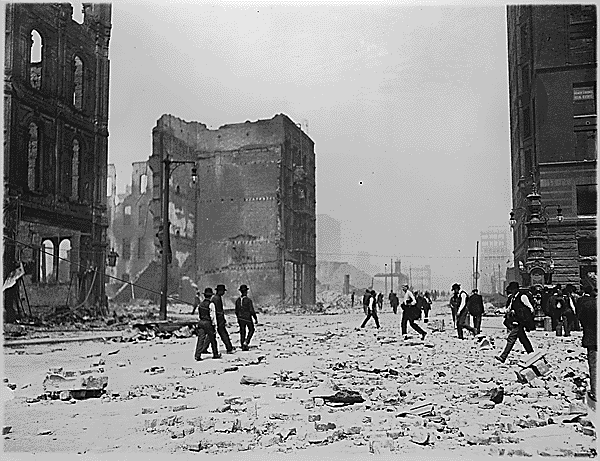
Market Street after the fires
View from Market Street looking west toward Van Ness Avenue and Twin Peaks. Third Street is on the left, Lotta’s Fountain (at Geary and Kearny) is on the right. Photo: UC Berkeley, Bancroft Library
“I don’t think there were any people anywhere else in the world who were as friendly as the old San Franciscans. There was absolutely no question whatsoever.
People were dragging their trunks along the street, and someone would come along and help them.
They’d take someone in their house they had never seen before in your life. People would be yelling out, ‘You want some place to stay, you want some place to stay?’ Very, very fine.”
—Aurelious Alberga